Loading...
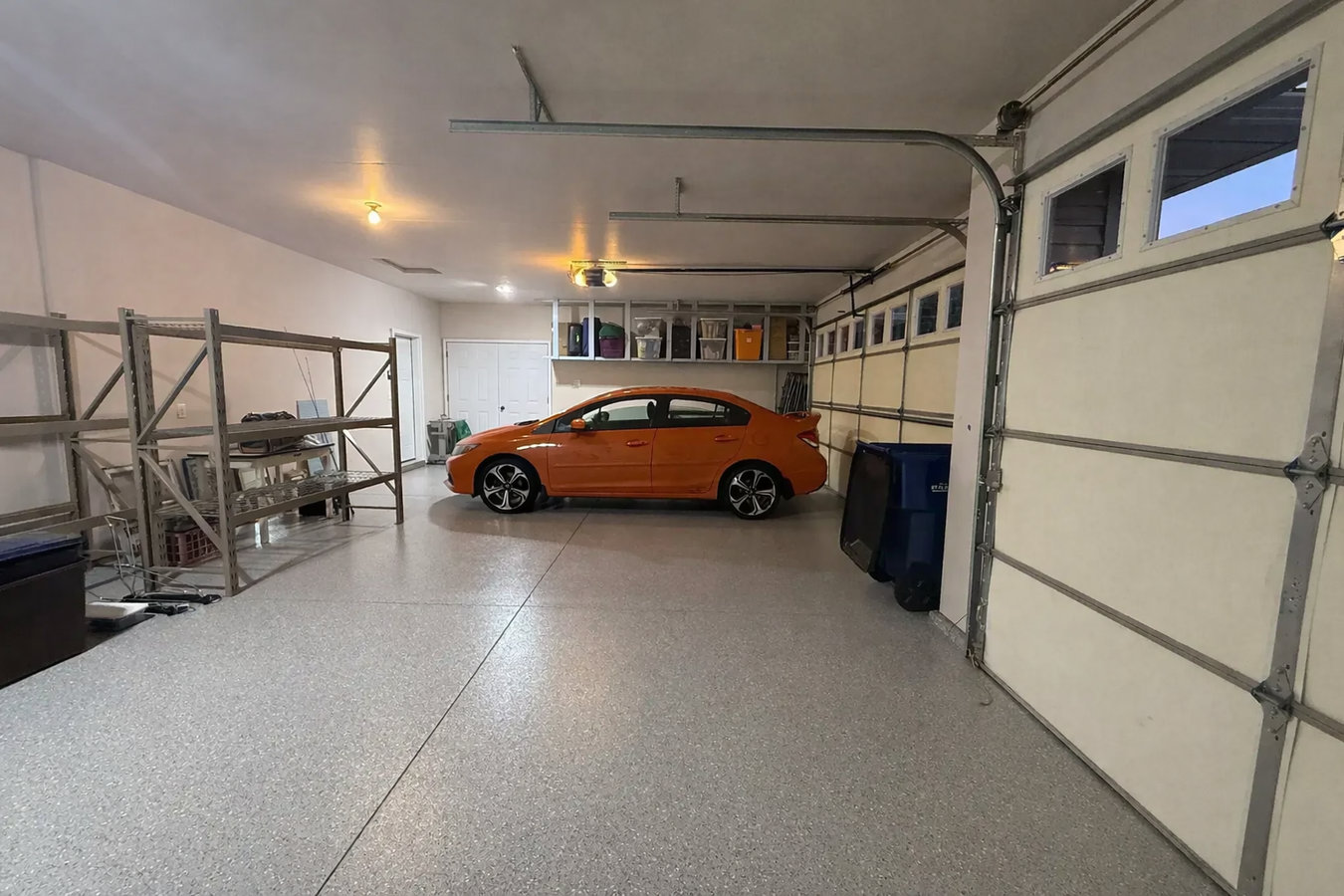
Cracked, heaving, or just worn-out garage floor? We handle the full job - permits, demolition, clay-soil base prep, the pour, and drainage slope - so your new slab lasts and the city inspection passes.
Garage floor concrete in Montebello covers the full scope - removing the old slab if one exists, compacting the soil base, pouring a reinforced four-to-six-inch slab with proper drainage slope, and passing the city inspection - most residential garages take one to three days on-site, with the floor walkable within 24 to 48 hours and ready for vehicle traffic after seven days. Quality Montebello Concrete handles every step from the permit application through the final city sign-off.
Most Montebello homeowners call us after noticing their garage floor cracking in the same spots year after year, developing low spots that pool water, or simply reaching the end of a 50-to-70-year lifespan on an original postwar slab. The clay-heavy soil common across this part of Los Angeles County is the underlying driver in almost every case - it expands and contracts with seasonal moisture, and without a properly compacted base underneath, the slab never had much of a chance. If you are also thinking about upgrading your decorative concrete finishes inside the garage or on adjacent surfaces, we can coordinate that as part of the same project.
The American Concrete Institute publishes the industry standards that define proper slab thickness, reinforcement, base preparation, and curing time - the same benchmarks that shape how we approach every garage floor project in this area.
Small hairline cracks in a garage floor are common and often harmless. But if a crack has grown since you first noticed it, or is wide enough to catch a coin, the slab underneath is shifting. In Montebello, this is almost always caused by clay soil that swells and shrinks with seasonal moisture changes - a cycle that puts constant stress on any slab without a properly compacted base.
If part of your garage floor feels like a speed bump when you roll a cart across it, or if there is a visible step between two sections of the slab, the ground underneath has moved. This kind of uneven settling is especially common in older Montebello homes where the original slab was poured on unprepared or loosely packed soil.
A properly installed garage floor is slightly sloped toward the door so water drains out naturally. If puddles form in the middle or back of your garage after it rains or after you wash your car, the floor has either settled unevenly or was never poured with the right slope. That standing water will work its way into any cracks and accelerate their growth.
If the top layer of your garage floor is peeling, pitting, or turning to a fine powder when you sweep, the surface has broken down - a process called spalling. Once it starts, it tends to spread. A spalling floor is also harder to clean and increasingly uncomfortable to walk or work on. This often shows up in slabs from the 1950s and 1960s that were poured with less precise mix ratios than modern standards require.
Every garage floor project starts with a free on-site visit to assess the current slab, check the drainage situation, and look at the soil conditions before quoting a price. We pull the required permit through the City of Montebello Building and Safety Division, break up and haul away the old concrete if needed, compact the soil base, set the forms and reinforcement, and pour the new slab in a single continuous operation. If you want to finish the floor with an epoxy coating once the concrete has cured, or if you are also considering an upgrade to your concrete floor installation inside an adjacent space, we can coordinate both under one project.
Standard garage slabs are poured four inches thick for passenger vehicles - five or six inches if you park a truck, SUV, or store heavy equipment. Steel mesh or rebar is embedded before the pour to hold the slab together if cracks do form over time. Control joints are cut at proper intervals while the concrete is still green, giving the slab planned places to flex with seasonal soil movement rather than cracking unpredictably across the middle. The finished surface is troweled smooth or broom-finished depending on your preference, and sloped slightly toward the garage door so water drains out rather than pooling inside.
Demo the old floor completely, address the base, and start fresh - the right call for cracked, settled, or spalling slabs past their useful life.
Building a concrete floor in a garage that currently has a dirt or gravel surface - from ground prep through the finished pour.
The right thickness for most residential garages with passenger vehicles - reinforced with mesh and properly sloped.
For garages used to store trucks, SUVs, or equipment - a thicker pour with heavier reinforcement to handle the extra load.
A smooth troweled surface prepared specifically for a follow-up epoxy or polyurea coating once the concrete has fully cured.
Slab poured with a cross-slope toward the door or a central floor drain - for garages that need to shed water quickly.
Montebello's residential neighborhoods are made up largely of single-family homes built between the 1940s and 1970s - and many of those original garage slabs are now well past their practical lifespan. Slabs from that era were often poured only three inches thick, without reinforcement, and on soil that was never properly prepared. By now, Montebello's expansive clay soil has gone through decades of wet seasons and dry summers, expanding and contracting underneath slabs that were not designed to flex with it. The result is the cracking, heaving, and uneven settling that homeowners throughout the city see every day. Homeowners near the flat streets around Montebello Town Center and in the older blocks off Beverly Boulevard tend to see this most often, but it shows up across the whole city.
The summer heat in the San Gabriel Valley also creates challenges that contractors from outside the area sometimes underestimate. When temperatures push into the 90s, fresh concrete can dry too quickly on the surface before it has fully hardened underneath - leading to surface cracks that show up within weeks of the pour. We schedule pours for the cooler morning hours and take the extra steps needed to keep the concrete curing evenly. Homeowners in Commerce and East Los Angeles face the same soil and climate conditions and we handle both regularly.
You call or message us, describe the garage and what is going on with the floor, and we schedule a free on-site visit. We respond within one business day. There is no charge for the visit or the written estimate.
We assess the current slab, check drainage, look at the soil, and review any permit history. You receive a written estimate that itemizes demolition, materials, permits, and labor - no surprise line items once work starts.
Once you approve the estimate, we apply for the building permit through the City of Montebello before any work begins. This typically takes a few business days. We coordinate everything - you do not need to visit any city office.
The crew breaks up and hauls the old slab, compacts the base, sets forms and reinforcement, and pours the new concrete. After curing, a city inspector signs off on the work. We coordinate the inspection visit so you do not have to.
No obligation. We itemize everything - demolition, permits, and labor - before you commit to anything.
(213) 671-0896Every concrete contractor working legally in California must hold a state-issued C-8 license through the Contractors State License Board. Ours is current, bonded, and insured. You can verify any contractor's license status at cslb.ca.gov - it takes about two minutes and tells you whether they are active and complaint-free.
We have been working in Montebello's residential neighborhoods long enough to know the local soil conditions, the city's permit process, and the kinds of older slabs common in postwar-era homes here. That local knowledge is not something you can pick up from a national franchise.
We apply for every required city permit before the first tool touches your garage. This means the work is inspected, on record, and protected - so you never have a permit issue come up during a home sale or insurance claim. If a contractor suggests skipping the permit, that is a clear red flag.
Montebello's expansive clay soil is the main reason garage floors fail prematurely in this area. We compact the base carefully and lay the appropriate gravel layer before every pour. This is the step that separates a slab that lasts 30 years from one that starts cracking in three.
Every one of those points comes down to the same thing: you should be able to hire a concrete contractor without worrying about whether the work will hold up or whether the paperwork is in order. We make that straightforward. Contact us to schedule a free on-site visit.
Transform your garage floor or outdoor surfaces with stamped, stained, or polished finishes that hold up to Montebello's heat and UV exposure.
Learn moreNew concrete flooring for interior spaces - workshops, basements, and utility areas - poured to the right thickness for the load and use case.
Learn moreSchedule your free on-site estimate today - summer books fast in the San Gabriel Valley, and permits take a few days to process before we can start.