Loading...
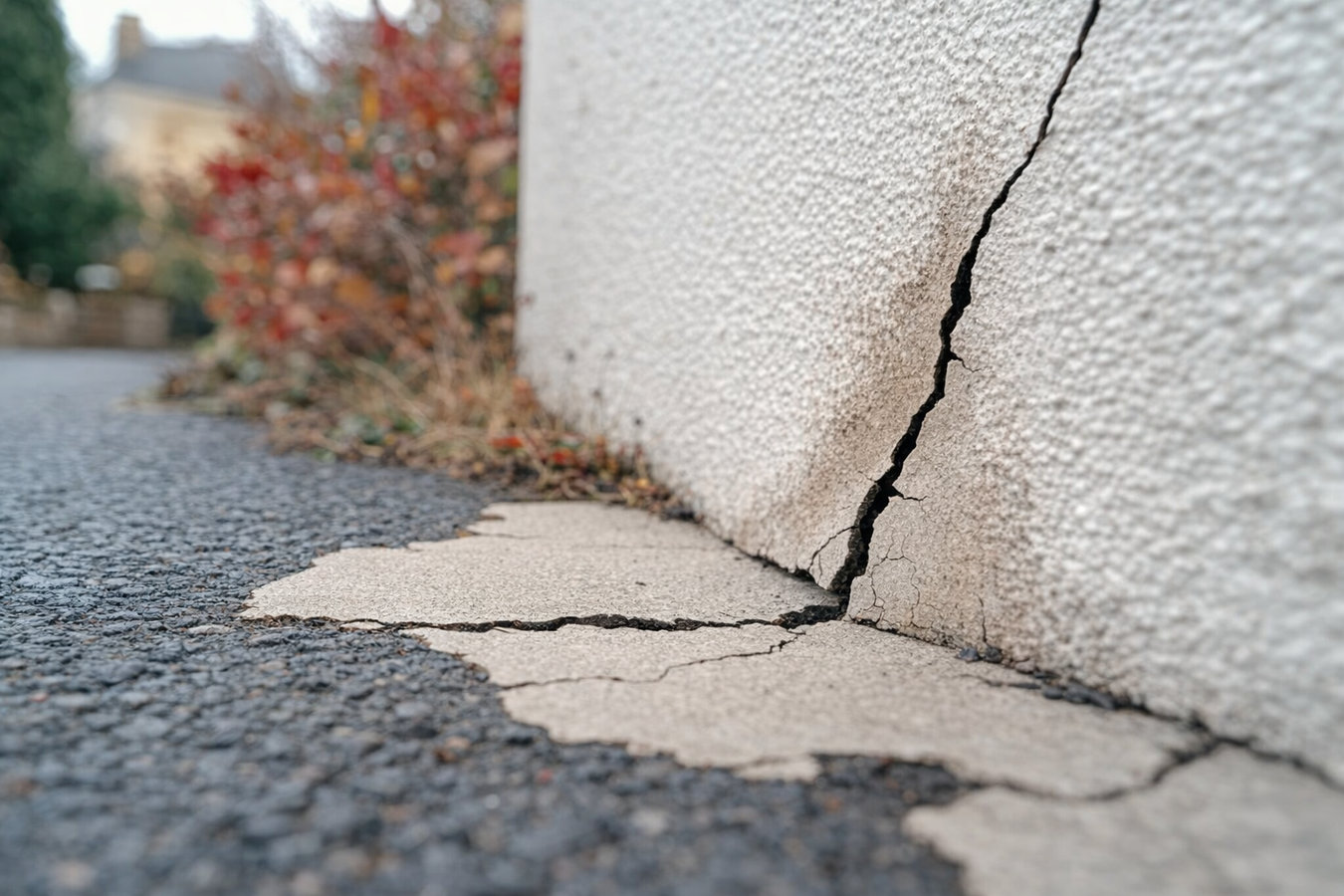
Sunken or uneven concrete in Montebello is usually a soil problem, not a concrete problem. We lift your slab back to level using the right method for local clay conditions - same-day service on most residential jobs, and a written estimate before we drill a single hole.
Foundation raising in Montebello lifts sunken or uneven concrete slabs back to their original level position - most residential jobs are completed in a single day, with foam injection allowing walkable surfaces within 30 minutes of completion. The process involves drilling small holes through the slab, pumping material underneath to fill voids and push the concrete back up, then patching the holes flush with the surface. It costs a fraction of a full slab replacement and preserves the concrete you already have, as long as the slab itself is structurally sound. Quality Montebello Concrete chooses between mudjacking and polyurethane foam based on your specific soil conditions and timeline, not a one-size-fits-all approach.
In Montebello, the clay-heavy soil of the San Gabriel Valley is the most common reason slabs sink in the first place. That soil expands when it rains in winter and shrinks during the long dry summer - and that repeated movement creates voids beneath slabs over time. Homes built during the postwar building boom of the 1940s through 1960s are especially susceptible, since soil compaction standards from that era were less rigorous than today. If your home also has issues beyond the slab - settled steps, shifting retaining walls, or cracked flatwork - our slab foundation building team can assess whether a full replacement makes more sense than a lift.
The American Concrete Institute recognizes slab lifting as a well-established repair method appropriate for residential and commercial structures when the concrete itself is in sound condition. We follow their guidance on pressure limits and injection spacing to protect your slab from additional stress during the lift.
When a slab shifts, the door frames and window frames move with it, and doors that used to swing freely start catching on the floor or frame. This is one of the earliest and most reliable signs that something has changed beneath your home. In Montebello's older homes, this often shows up after a wet winter when clay soils have swelled and then dried unevenly.
Diagonal cracks in drywall or plaster - especially ones that radiate from the corners of door or window openings - are a classic sign of foundation movement rather than normal settling. These cracks tend to widen over time if the underlying shift is not addressed. If you are seeing new cracks appear or old ones getting larger, that is a signal worth taking seriously.
You can often feel a slab problem before you see it - a subtle slope in a hallway, a chair that rocks on what should be a flat surface, or a marble that rolls on its own across the kitchen floor. In Montebello homes built on fill soil from the postwar era, this kind of gradual settling is common and tends to get worse without intervention.
If you notice water sitting against your foundation after rain or flowing toward your home rather than away from it, that water is likely eroding the soil underneath your slab. Montebello gets concentrated rainfall during winter storms, and that erosion creates the voids that cause slabs to sink. Catching this early - before the slab actually drops - can save a more expensive repair later.
Every foundation raising job starts with a free on-site assessment. We walk the affected area, measure how much the slab has dropped, look at drainage patterns around the property, and check the condition of the concrete itself. If we think the slab is too damaged to lift - badly cracked or crumbling sections that will not hold the repair - we say so directly and explain what your alternatives are. You get a written estimate before any work is scheduled. For homes where foundation issues are part of a larger structural picture, we can coordinate this work with our concrete cutting team to remove damaged sections cleanly before the lift begins.
On the day of the job, we drill a series of small holes through the slab at calculated intervals and inject material - either a cement-based slurry or expanding polyurethane foam - until the slab rises back to the correct level. We monitor the lift carefully as it happens, adjusting pressure and injection points to keep the raise even across the full surface. The holes are patched with concrete before we leave. We also address any drainage issues we identified during the assessment, because a lift that does not account for the reason the slab sank in the first place is not a complete repair. For homeowners who need the lifted area to connect to a finished slab or new pour, we can coordinate with our slab foundation building crew to complete the full scope under one contract.
A cement-and-soil slurry pumped under the slab - suited for homeowners who want the lower-cost option and do not need to use the surface again the same day.
Lightweight expanding foam that cures within 15 minutes - suited for homeowners who need fast turnaround or have softer soil that cannot handle added weight.
Restoring the level and drainage slope of settled driveway sections - suited for homeowners with uneven concrete at the garage entry or at the street transition.
Raising a sunken garage floor back to a drivable, level surface - suited for homeowners who have noticed a lip at the garage door threshold or oil pooling in low spots.
Correcting settled outdoor flatwork that has created trip hazards - suited for homeowners who want to avoid a full concrete replacement on outdoor slabs.
Raising a sunken section of interior concrete floor - suited for homeowners with visible slope in utility rooms, garages converted to living space, or ground-floor additions.
Montebello sits in the San Gabriel Valley on expansive clay soil - the kind that swells when winter rains soak in and shrinks as summer heat dries it out. That seasonal cycle is one of the main reasons slabs shift here more than in cities with more stable ground. Homes built during the 1940s through 1960s - a large share of Montebello's housing stock - were poured on soil that was not compacted to today's standards, which makes settling more likely as the decades add up. The proximity to the Whittier Fault also means that even moderate seismic activity over the years can shift soil and cause gradual slab movement that compounds the problem. Foundation raising done right in Montebello has to account for all of this - not just fill a void and hope for the best.
Our crews work across the entire service area, including homeowners in Pico Rivera and Downey, where the same clay soil and postwar housing conditions create the same foundation raising needs. The California Geological Survey publishes soil hazard maps that show exactly where expansive clay is most concentrated in the San Gabriel Valley - it is the same territory we work in every week.
When you call, we ask a few questions - where the problem is, how long you have noticed it, and whether there are related symptoms like sticking doors or visible cracks. This helps us confirm foundation raising is the right service before scheduling a visit. We respond to all inquiries within 1 business day.
We visit your property, walk the full affected area, measure the drop, and look at drainage patterns and the condition of the concrete. You receive a written estimate that covers the full scope before any work is approved - no verbal estimates, no surprises on the invoice.
On the work day, we drill small holes through the slab at calculated intervals and inject material until the slab rises back to the correct level. We monitor the lift carefully as it happens - adjusting pressure in real time - so the raise is even across the full surface rather than concentrated in one spot.
The injection holes are patched with concrete before we leave. We review drainage around the repaired area and flag any issues that could cause settling to return. If foam injection was used, you can walk on the surface within 30 minutes. For cement-based methods, we give you a specific wait time before returning to normal use.
Free written estimate. We assess the soil conditions, explain the right method, and give you a price before any work begins.
(213) 671-0896We have raised slabs in Montebello, Pico Rivera, Commerce, Downey, and eight other neighboring cities - all on the same clay soils and postwar housing stock. That local pattern recognition means we are not guessing about what is happening beneath your slab.
We choose between mudjacking and foam injection based on your soil conditions, the size of the affected area, and your timeline - not a standard upsell. Recommending the wrong method can void the repair before the next rainy season ends.
Every job we complete is covered by a current California Contractors State License Board C-8 concrete contractor license, general liability insurance, and workers compensation coverage. You can verify our license status at any time on the CSLB website at cslb.ca.gov.
We do not quote over the phone without seeing the job. Every customer receives a written estimate after the on-site assessment - covering the full scope and the drainage recommendations - before any work is approved or scheduled.
Foundation raising is one of those repairs where doing it right the first time costs less than doing it twice. We approach every job with the same on-site rigor we would want a contractor to bring to our own property.
When a slab is too damaged to raise, precise cutting removes the affected section cleanly so it can be repaired or replaced without disturbing surrounding concrete.
Learn moreFor slabs that are past lifting - crumbling, badly cracked, or structurally compromised - a full slab replacement delivers a new base built to current California seismic and soil standards.
Learn moreMontebello's wet season puts more stress on settled slabs every year - getting a free assessment now costs nothing and keeps the repair from growing into a replacement.